Aviation Insurance Broker for FBOs, MROs, Operators & Aviation Service Firms
Aviation insurance needs to reflect the actual work performed around aircraft, passengers, hangars, parts, fuel, maintenance, ground equipment, and contracts. Bryce reviews aviation programs involving hangarkeepers liability, premises liability, aviation products, completed operations, non-owned aircraft, GSE, aircraft custody, fuel-related exposures, airport/vendor contracts, MRO exposures, and incident documentation.
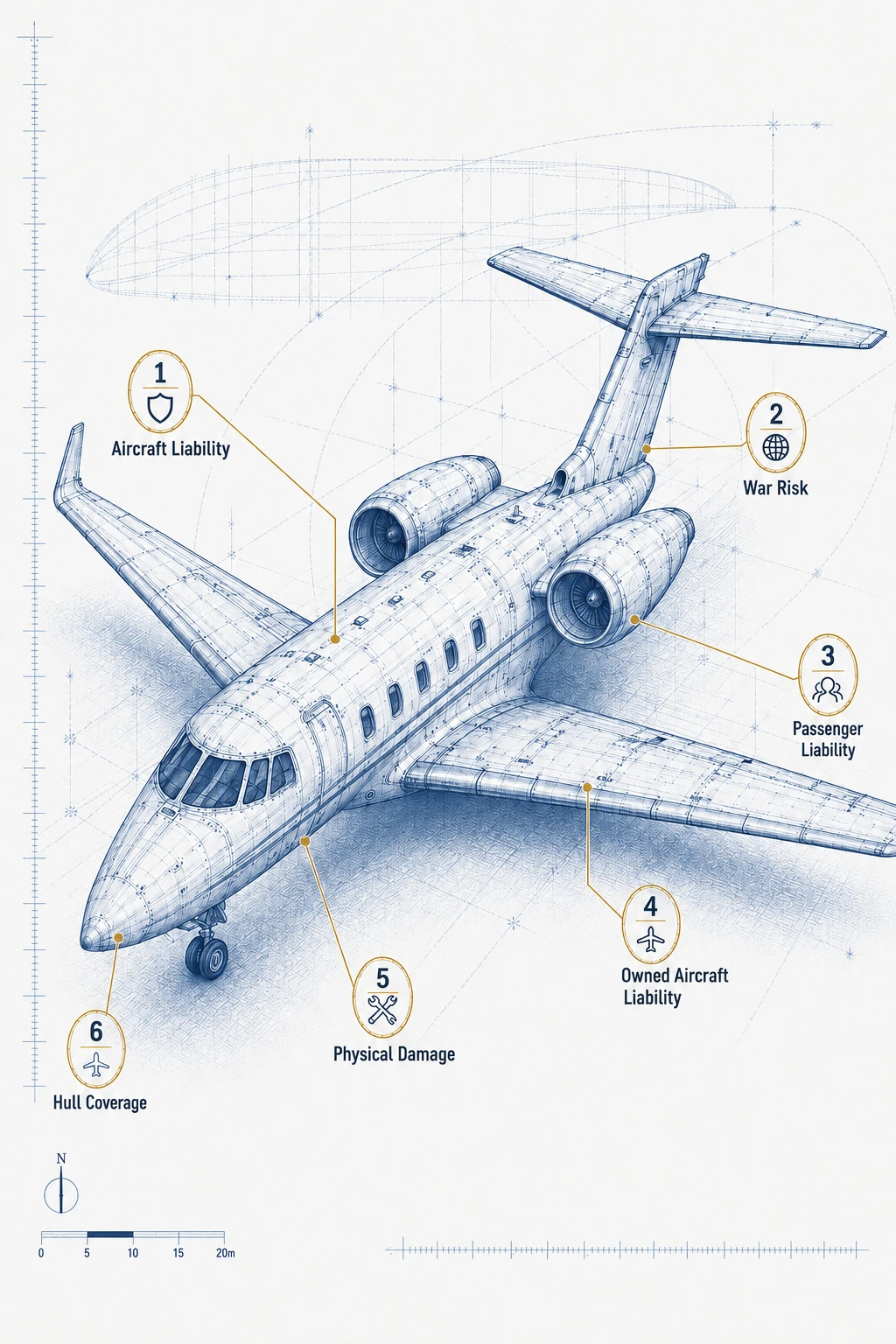
Aviation segments I build programs around
Each has a distinct underwriting story, a different short list of viable markets, and a different way coverage tends to fail.
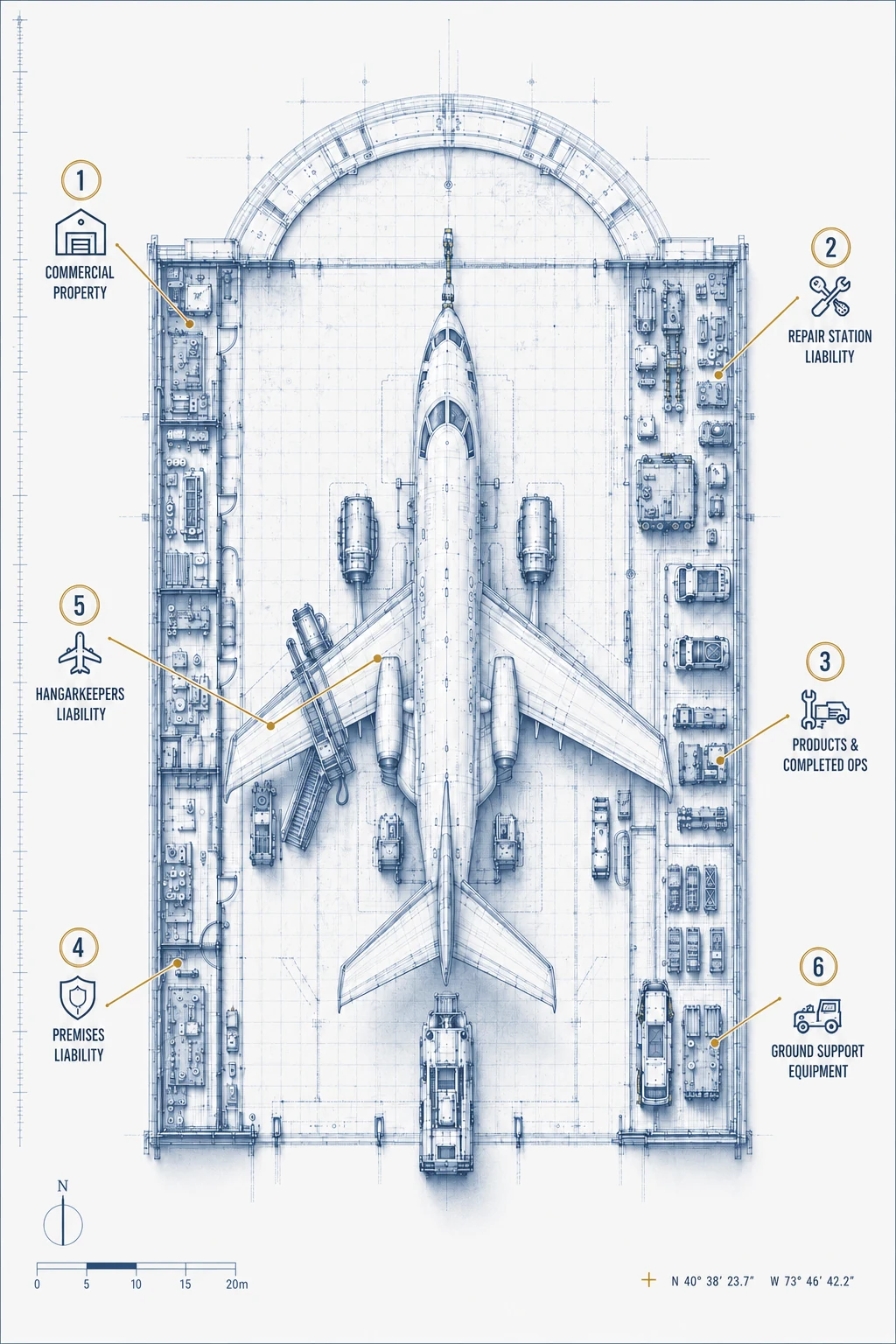
Facility-level risk lives on the ramp, in the hangar, and in the shop.
Property, hangarkeepers, repair station E&O, products and completed ops, premises liability, and ground support equipment all sit on top of each other. I structure programs so they line up — not so they leave a gap between aviation and commercial forms.
The full aviation coverage universe
Liability and property/CCC are open by default — that's where most aviation programs need attention first. Expand the others to see the rest of the aviation coverage universe.
Aircraft & Hull
- Agreed Value Hull (in-flight, taxi, not-in-motion)
- Hull War, Hijack & Allied Perils
- Spare Engines & Spare Parts
- Loss of Use / Loss of License
- Deductible Buy-Down
Liability
- Aircraft Liability (BI / PD / Passenger)
- Premises & Operations
- Hangarkeepers Legal Liability
- Airport & FBO Liability
- Refuelers Liability
- Non-Owned Aircraft Liability
- Excess / Follow-Form
MRO, Products & Services
- Aviation Products Liability
- Aviation Grounding
- MRO / Repair Station Errors & Omissions
- Completed Operations
- Component Recall
Property & CCC
- Hangars, FBO Buildings & Improvements
- Hangarkeepers In-Care Aircraft Values
- Tooling, GSE & Shop Equipment
- Business Interruption / Loss of Revenue
- Avionics & Parts Inventory
Workforce & Management
- Workers Compensation (incl. FAR-classified)
- Employment Practices Liability
- Directors & Officers
- Crime / Fidelity
- Cyber Liability
Specialty & Statutory
- War, Hijack & Terrorism Territory Extensions
- Cargo Legal Liability
- Environmental / Fuel Pollution
- UAS / Drone Liability & Hull
- Contingent & Non-Owned Auto / GSE
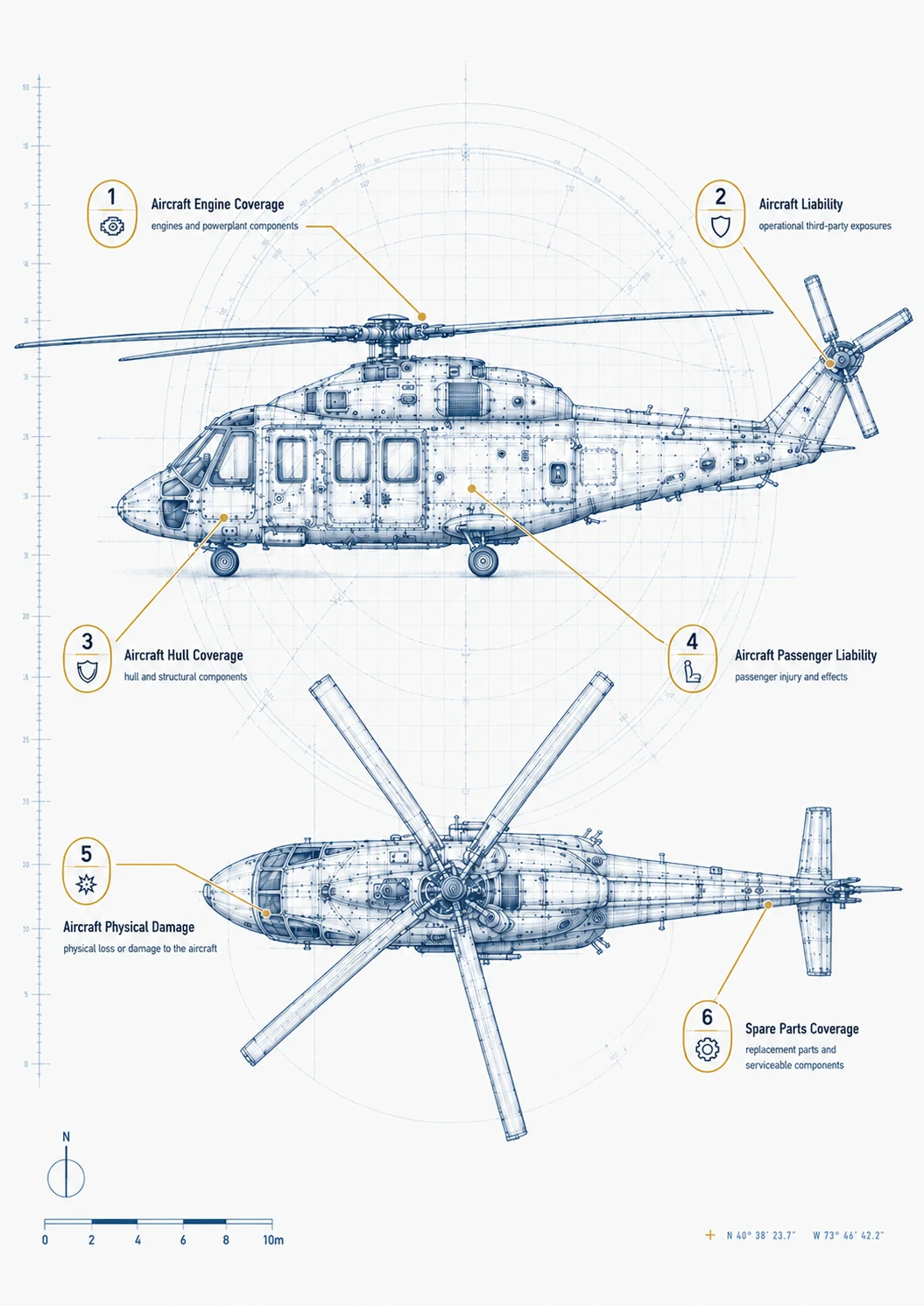
Rotorcraft programs need their own underwriting story.
Engine and powerplant exposure, hull values, passenger liability, physical damage, and spare parts inventories all behave differently on rotorcraft than on fixed-wing. I structure programs that reflect the mission — EMS, utility, offshore, training, or executive transport.
My aviation audit checklist
- 01Pilot warranties — open vs. named, hours-in-type, recurrent training cadence
- 02Hangarkeepers values sized to peak aggregate, not average daily
- 03Agreed hull values current vs. real market — over- and under-insured
- 04Non-owned coverage for managed, demo, training, and customer aircraft
- 05MRO / repair station wording — products, completed ops, grounding
- 06Excess and bumbershoot truly follow form over the primary aviation policy
- 07War, hijack & terror endorsements matching actual operating territory
- 08GSE, ramp vehicles, and tugs covered under aviation or auto — and which
- 09Contract compliance — leases, management agreements, airport tenancies
- 10Crew, contract pilot, and DPE exposures correctly classified
How aviation risk is actually priced
- 01Pilot qualifications, hours-in-type, currency, and check-ride history
- 02Maintenance discipline — Part 145 vs. owner-operator, inspection intervals, records
- 03Ramp safety — tug, wing-walker, fuel handling, and FOD programs
- 04Custody controls — who touches the aircraft, when, and under what authority
- 05Parts traceability and QA — SUPs program, FAA Form 8130-3 discipline
- 06Passenger counts, route structures, and high-net-worth passenger exposure
- 07Loss narratives — how prior losses were investigated, corrected, and documented
- 08Sub-contractor controls, COI tracking, and indemnity transfer
Where aviation programs usually break
Patterns that show up across FBOs, MROs, Part 135 operators, flight schools, aircraft managers, rotorcraft operators, UAS companies, owners, and aviation service providers.
- Hangarkeepers limits and customer aircraft values
- Fueling liability and ramp operations
- Products / completed operations for maintenance or parts work
- Pilot warranties, training requirements, and approved-use restrictions
- Non-owned aircraft and contractual use obligations
- Ground support equipment and premises / ramp liability
- Aircraft schedules, leases, management agreements, and dry / wet lease issues
- Passenger liability, charter operations, and operational-control assumptions
- Excess aviation liability alignment
Where I focus by operation type
The center of gravity of an aviation program changes depending on what the business actually does. A few common starting points:
FBOs
Hangarkeepers, fueling liability, ramp operations, GSE, premises liability, and customer aircraft.
MROs and repair stations
Products and completed operations, repair station work, customer aircraft, grounding concerns, parts, and documentation.
Operators and aircraft managers
Aircraft schedules, pilot warranties, approved uses, passenger liability, non-owned aircraft, lease and management agreements, and excess limits.
Bryce Lockerson · AMA Risk
Specialty Broker at Cothrom Risk & Insurance Services · U.S. Navy Veteran · ADCI Member · Fort Lauderdale, FL — minutes from FLL, OPF, and FXE.
FAA, contractual, maintenance, operational-control, and regulatory issues should be reviewed with qualified counsel or qualified aviation advisors where appropriate. AMA Risk reviews these issues from an insurance-program perspective.
Aviation insurance questions
Educational answers to common questions about aviation insurance for FBOs, MROs, Part 135 operators, and aviation service firms. Answers are general and do not constitute legal, tax, insurance, or risk-management advice.
Hangarkeepers liability addresses an aviation business's legal liability for physical loss or damage to non-owned aircraft (and often related property) while in its care, custody, or control — typically inside hangars, on the ramp, or during movement. Limits should be sized to peak in-care aggregate values, not average daily values, and the form's definition of covered property should be reviewed against actual operations.
Answers are educational summaries only. They do not modify policy terms, conditions, or exclusions, and they do not constitute legal, tax, insurance, or risk-management advice.
Request an Aviation Program Review
Send your current policies, pilot rosters, schedules, renewal date, and top concern. I'll tell you what else is needed.
Request an Aviation Program Review