Marine Insurance Broker for Maritime, Shipyard, Marina & Waterfront Operations
Marine businesses are not standard commercial accounts. Vessel operations, over-water work, ship repair, customer property, crew injury, pollution, contracts, and waterfront property exposures all need to be reviewed together.
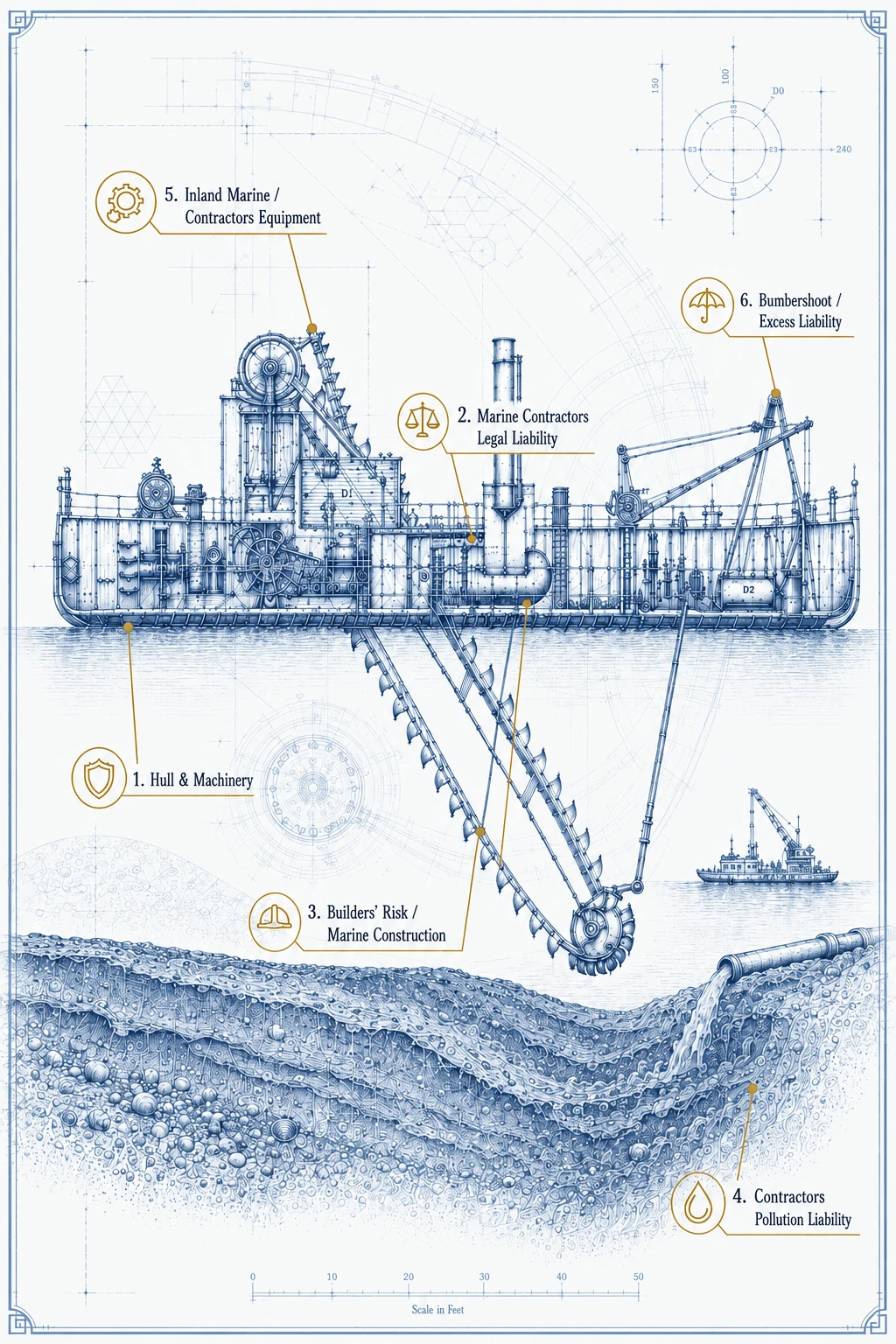
Marine segments I build programs around
Each of these has a distinct exposure profile, a different statutory framework, and a different short list of viable specialty markets. I work all of them.
The full marine coverage universe
Liability and crew exposures are open by default. Expand the others to see the rest of the marine coverage universe I work through on every review.
Vessel & Hull
- Hull & Machinery (H&M)
- Protection & Indemnity (P&I)
- Increased Value / Disbursements
- War, Strikes & Piracy
- Builders Risk (new construction & conversion)
- Charterers Liability
Liability
- Marine General Liability (MGL)
- Marina Operators Legal Liability (MOLL)
- Ship Repairers Legal Liability (SRLL)
- Wharfingers Liability
- Terminal Operators Liability
- Stevedores Liability
- Bumbershoot / Marine Excess
Workers & Crew
- USL&H (Longshore & Harbor Workers)
- Maritime Employers Liability (MEL)
- Jones Act / Crew Coverage
- State Workers Compensation overlap
- Voluntary Compensation for Foreign Crew
Property & Care, Custody & Control
- Care, Custody & Control (CCC)
- Docks, Piers, Pilings & Floating Structures
- Boat Storage (wet slip & dry stack)
- Travel Lifts, Forklifts & Yard Equipment
- Business Interruption / Extra Expense
Cargo & Transit
- Ocean Cargo
- Inland Marine / Motor Truck Cargo
- Project Cargo
- Warehouse Legal Liability
- Freight Forwarders & Logistics Liability
Pollution & Environmental
- Vessel Pollution / OPA 90 (COFR)
- Marina & Site Pollution
- Contractors Pollution Liability
- Fuel & Hazmat Operations
- Wreck Removal & Debris
My marine audit checklist
- 01USL&H, MEL, and Jones Act separation — payrolls properly split by exposure
- 02CCC limits sized to true peak stored value, not last year’s snapshot
- 03Pollution wording: sudden & accidental vs. gradual, on-water vs. on-site
- 04Named storm sublimits, wind deductibles, and hurricane-plan compliance
- 05Contract requirements — additional insured, waiver of subrogation, primary/non-contributory
- 06Bumbershoot / excess alignment with underlying P&I, MGL, MEL, and auto
- 07Dock, piling, and floating-structure valuations vs. replacement cost
- 08Charterers and hired-vessel exposures identified and scheduled
- 09Wreck removal limits matching vessel size and waterway depth
- 10Certificates of insurance vs. actual policy provisions
With a generic broker
- 01Payroll misclassified between USL&H, Jones Act, and state comp
- 02CCC limit too low — one yacht in the slings exceeds the aggregate
- 03Pollution form too narrow — gradual seepage or fueling overflow excluded
- 04No named-storm plan; carrier denies wind loss for non-compliance
- 05Certificates promise coverage the policy doesn’t actually grant
- 06Contract indemnity assumed without confirming insurable transfer
- 07Bumbershoot doesn’t follow form over P&I — gap at first dollar of excess
- 08Wreck removal sublimit a fraction of the realistic recovery cost
- 09Sub-contracted divers, riggers, or crew uninsured under the wrong class code
- 10Builders risk ends at launch — no bridge to H&M sea-trial coverage
Where marine programs usually break
Patterns that show up across marinas, boatyards, contractors, shipyards, commercial diving firms, towing and salvage operators, yacht service companies, and marine manufacturers.
- Customer vessels in care, custody, or control
- USL&H, Jones Act, MEL, and state workers’ compensation mismatch
- Ship repairers’ liability wording
- Marina operators legal liability limits and exclusions
- Pollution assumptions around fuel, bilge, tanks, coatings, and over-water work
- Named storm plans, haul-out obligations, and property schedules
- Contractor work around seawalls, docks, lifts, pile driving, dredging, or shoreline protection
- Subcontracted divers, welders, captains, mechanics, riggers, or crane operators
- Bumbershoot / excess alignment over marine liabilities
Example: marina or boatyard program review
Where AMA Risk helps is translating the actual operation into a clear underwriting story — what is stored, what is worked on, what contracts require, and which exposures actually drive the account. A typical marina or boatyard review walks through:
- Wet slip, dry stack, and customer-vessel values
- Property of others and vessels in care, custody, or control
- Named storm plan and haul-out obligations
- Pollution wording and contractor pollution interaction
- USL&H / MEL / Jones Act / state workers’ compensation separation
- Ship repairers’ liability or marina operators legal liability structure
- Bumbershoot or excess follow-form alignment
Bryce Lockerson · AMA Risk
Specialty Broker at Cothrom Risk & Insurance Services · U.S. Navy Veteran · ADCI Member · Based in Fort Lauderdale, FL.
Maritime contracts, indemnity obligations, Jones Act, USL&H, and regulatory issues should be reviewed with qualified counsel where appropriate. AMA Risk reviews these issues from an insurance-program perspective.
Marine insurance questions
Educational answers to common questions about marine insurance for shipyards, marinas, contractors, and waterfront operations.
Marine general liability is a liability form built for marine operations. It typically responds to bodily injury and property damage arising out of marine premises and operations, and addresses exposures that standard commercial general liability often excludes or treats inconsistently, such as work over or adjacent to water, customer vessels, and marine equipment. Coverage terms, exclusions, and sublimits vary by carrier and form.
Answers are educational summaries only. They do not modify policy terms, conditions, or exclusions, and they do not constitute legal, tax, insurance, or risk-management advice.
Request a Marine Program Review
Send your current policies, schedules, renewal date, and top concern. I’ll tell you what else is needed.
Request a Marine Program Review